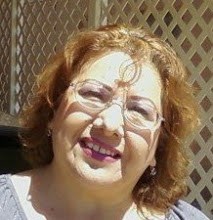
The Arizona State Veteran Home is one of the best kept secrets in Central Phoenix. It is a 200 bed facility that offers nursing home and short term rehab in a skilled nursing facility to Veterans and their spouses. It is a thriving facility that welcomes the surrounding community into their home. The community visits through a variety of programs. For example, on Veterans Day, over 200 visitors came to the home to thank the Veterans, assist them to the parade and share a barbecue hosted by the Phoenix Fraternal Order of Police Lodge 2 and the Vietnam Veterans of America. The Honorable Governor Janice Brewer was in attendance for an afternoon of entertainment and tribute to all who have served our country through the military. The home is a hub of activity thanks to the many volunteers who share their talents, kindness and gratitude. The Director of the Arizona Department of Veterans Services, Colonel Joey Strickland, summed it up best when he said "The Arizona State Veteran Home is a place where Veterans come to live, not to die". That statement is evident when you come to the home. At first impression you see a beautiful building with a lobby filled with veterans sitting around talking, watching TV or playing a game a pool. As you venture on you see volunteers visiting with their dogs, you may hear the birds singing from the large aviary or you may hear the caller from a game of bingo. Volunteers are the constant reminder to the Veterans who reside at the Arizona State Veteran Home that the community remembers what these elderly Vets have done for them. If you would like to thank a disabled Veteran from World War II, Korea or Vietnam please consider volunteering at the Arizona State Veteran Home. There are a variety of volunteer positions available. If you can't find one that interests you, the Volunteer Department will help create the perfect job just for you. The greatest need right now is for Volunteers to help with the Adopt A Vet program, the Family Pet Visit program and the front receptionist/greeter program. If you are available to volunteer even one day a month, please consider volunteering at the Arizona State Veteran Home. The men and women who served our Country so bravely appreciate the fact that they are not forgotten. For further information contact Candy Covarrubiaz at ccovarrubiaz@azdvs.gov or call her at 602-351-6879
Need help paying for the care? Arizona Long Term Care (ALTCS) can assist with this cost.
Saturday, December 12, 2009


Fall Prevention
Reduce Your Risk Of Falling
Tips For Seniors And Family Caregivers
Each year, falls involving older adults account for thousands of hip fractures and other serious injuries. In fact, injuries resulting from falls are a leading cause of death for older persons. Not all falls can be prevented, but many can! So, it is important to understand the risk, and to know what can be done to help protect yourself or your loved one.
SENIORS HAVE AN INCREASED RISK OF FALLING BECAUSE OF?
Physical and mental changes - Most older persons, sooner or later, will experience problems with their eyesight, sense of balance, mobility, bone structure, and reflexes. Confusion, forgetfulness, stroke, Parkinson's, and Alzheimer's are also important risk factors.
Medications - Most seniors take a variety of medications, both over-the-counter and prescription. Many medications can cause dizziness, drowsiness, or other side effects that make it harder to keep your balance.
Environmental causes - Throw rugs, electrical cords, wet and slippery floors, rough floor surfaces, slick walkways and steps, and poor lighting are all examples of things or conditions that can trip you up.
PRACTICAL SUGGESTIONS FOR PROTECTING AGAINST FALLS
Although it is unrealistic to think we can prevent all falls from happening, there are many proven ways of reducing the risk. Here are some important examples of how you can protect yourself:
- Ask your doctor about setting up a fall prevention exercise program for building up your strength and coordination. A good program will include aerobic, strengthening, and flexibility exercises, as well as specialized balance training.
- If you have experienced episodes of dizziness, or if you think you may have a problem with balance, vision, or your medications, talk with your doctor.
- Eat right. Getting the nutrition you need is just as important as getting appropriate exercise and rest.
- Be aware of your surroundings. Give yourself time to react to your physical surroundings and the other people around you, and pay special attention any time you are in new or unfamiliar surroundings.
- Do a careful safety inspection of your living spaces. Look for anything that could make you trip, like rough floor surfaces, throw rugs, poor lighting, extension cords, or clutter. While you are at it, try to identify improvements that could make your situation even safer, such as extra grab bars in the bath or shower, a second hand railing on the stairs, and additional lighting indoors and out.
Make fall protection a topic for discussion with family and healthcare providers. Preventing falls is a topic that deserves time and attention!
Sunday, August 2, 2009
Your Dimension of Greatness
No one can know the potential,
Of a life that is committed to win;
With courage - the challenge it faces,
To achieve great success in the end!
Of a life that is committed to win;
With courage - the challenge it faces,
To achieve great success in the end!
So, explore the Dimension of Greatness,
And believe that the world CAN be won;
By a mind that is fully committed,
KNOWING the task can be done!
And believe that the world CAN be won;
By a mind that is fully committed,
KNOWING the task can be done!
Your world has no place for the skeptic,
No room for the DOUBTER to stand;
To weaken your firm resolution
That you CAN EXCEL in this land!
No room for the DOUBTER to stand;
To weaken your firm resolution
That you CAN EXCEL in this land!
We must have VISION TO SEE our potential,
And FAITH TO BELIEVE that we can;
Then COURAGE TO ACT with conviction,
To become what GOD MEANT us to be!
And FAITH TO BELIEVE that we can;
Then COURAGE TO ACT with conviction,
To become what GOD MEANT us to be!
So, possess the strength and the courage,
To conquer WHATEVER you choose;
It’s the person WHO NEVER GETS STARTED,
That is destined FOREVER to lose!
To conquer WHATEVER you choose;
It’s the person WHO NEVER GETS STARTED,
That is destined FOREVER to lose!
Tuesday, July 7, 2009
VA Aid & Attendance
Aid & Attendance and Housebound assistance are additional funding that can be obtained when a Veteran or widow of a Veteran requires the assistance of another person with some of their activities of daily living (ADL's) and cannot live independently OR if the Veteran or widow of the Veteran is blind. ADL's include bathing, dressing, grooming, toileting, mobility, transferring, meals, transportation, housekeeping, etc. These benefits are also needs-based, however, VA does reduce the income by the medical expenses incurred by the Veteran or widow.
What do you need to submit with your application for VA benefits?
DD214 and/or discharge papers
Marriage Certificate
If deceased, Veteran's death certificate
Verification of all sources of income
Verification that assets are below limit
Medical Expense Report or verification of medical expenses
Statement from doctor regarding medical conditions and need for ADL assistance
Written statement from facility regarding cost and level of care and ability to control, store, and administer medications.
What do you need to submit with your application for VA benefits?
DD214 and/or discharge papers
Marriage Certificate
If deceased, Veteran's death certificate
Verification of all sources of income
Verification that assets are below limit
Medical Expense Report or verification of medical expenses
Statement from doctor regarding medical conditions and need for ADL assistance
Written statement from facility regarding cost and level of care and ability to control, store, and administer medications.
Thursday, May 28, 2009
Incontinence
Encouraging Older Loved Ones to Manage Incontinence
Over 25 million Americans experience incontinence. Yet most seniors who are dealing with the condition may well feel that they are all alone, because this isn't a topic that comes up very often! Family caregivers may be the only one their loved one confides in—or their loved one might avoid discussing the issue, even when family caregivers know there is a problem.
Gail noticed that her 75-year-old mother, who was normally very active, wasn't going out much any more. Mom finally confided to Gail that she'd had an "accident" at the theater, and that she liked to be close to a bathroom at all times these days. "I guess it's just part of being old," Mom said sadly. Gail asked Mom if she'd talked to her doctor about the problem, but Mom said, "Oh no! I'd be too embarrassed!"
| | |
|

But it is very important that the person discuss this issue with his or her healthcare provider. Left untreated, incontinence usually worsens, and can be the first step to a debilitating withdrawal from life. This in turn leads to a decrease in the basic elements of healthy aging: social connectedness, physical activity and intellectual stimulation. Incontinence causes skin irritation, interferes with sleep, and can lead to depression. It is so important to reassure loved ones and encourage them to seek help for the condition!
What is urinary incontinence?
Urinary incontinence is the inability to maintain control over the release of urine from the bladder. The causes of incontinence vary widely, as does the degree of the problem. Incontinence may be brought on by illness, fatigue, confusion, or a hospital admission. It also may be caused by weakening of the muscles which control bladder outflow, disorders of the central nervous system or obstruction to the bladder.
It is helpful to be able to distinguish between the different types of incontinence:
- Urge incontinence occurs often in seniors and can be the result of neurological damage, strokes, diabetes, or the aftermath of bladder infections or kidney stones. In this circumstance, the individual does not receive a signal in time to reach the bathroom before the bladder begins to empty itself.
- Overflow incontinence occurs when small amounts of urine leak from a bladder that is always full due to such conditions as obstruction, constipation or nerve damage. In men, enlarged prostate is often the cause.
- Stress incontinence means the involuntary passing of urine during any increase in abdominal pressure, such as coughing, sneezing, laughing or lifting heavy objects. It is often seen in women who have had relaxation of the muscles of the pelvic floor, usually due to childbirth.
- Functional incontinence occurs when a person has normal bladder control, but is unable to get to the toilet on time because of a mobility problem. Alzheimer's and other types of dementia may also be a factor; people with these conditions may not be able to think about getting to the toilet or may forget how to get there and negotiate clothing.
Can incontinence be treated?
Like Gail's mother, many people believe that incontinence is just "a normal part of growing older." But—just as with memory loss, inactivity and so many other conditions— we now know that this isn't necessarily true. Yes, incontinence becomes more common as we grow older, but in many cases, it can be treated effectively.
So at the first sign of incontinence, it is important to consult a physician to determine its cause and type. Your loved one's physician can diagnose and treat underlying diseases, check and reevaluate medications that might cause or increase incontinence, and evaluate the severity of the problem. The patient may be asked to keep a "bladder diary," recording incidents of incontinence and the amount and frequency of urination. Ultrasound and other tests provide an idea of bladder volume, as well as any blockages or other contributing factors.
A variety of treatments are available, including:
Bladder training. The patient keeps a chart of urination and leaking, and then works out a bathroom schedule, planning trips to the toilet at certain set times (for example, once an hour).
Pelvic muscle exercises, such as "Kegels," can strengthen the bladder muscles and the muscles of the pelvic floor. This helps hold urine in the bladder longer. The time can be gradually extended so that urine is held for longer periods.
Medications. Some commonly prescribed drugs stop bladder contractions; others relax the muscles to prevent urgent or frequent urination. In post-menopausal women, estrogen pills, creams or patches may be prescribed.
Surgery. While only a physician can tell if treatment would be effective for any particular case, surgery can be effective, especially in treatment of stress incontinence and incontinence due to prostate enlargement.
Lifestyle changes. The physician may recommend cutting down or eliminating caffeine, alcohol and tobacco products. All can increase incontinence by irritating the bladder.
When treatments don't completely work…
People who are living with incontinence may feel more secure wearing special absorbent, disposable undergarments which are inconspicuous and quite effective in masking the incontinence. These undergarments are sold in drug stores and supermarkets, and though they don't "solve" the problem, they may bring a sense of peace of mind and dignity to your loved one.
If mobility problems prevent the person from making it to the bathroom in time, consider having a commode chair nearby.
Specially designed clothing makes it easier for people with arthritis, stroke or Alzheimer's to negotiate fasteners in time.
How can family help?
When dealing with an incontinent loved one, tact and sensitivity are always necessary. Try not to overreact if an older family member or friend has an accident around you. Dignity is a fragile thing in all of us, and it is something we all need to maintain. This is one of those occasions in which you need to be particularly careful in your caring.
But it's also important to talk about the problem with your loved one, and encourage him or her to seek treatment. The National Association for Continence estimates that the average senior waits close to seven years to report the problem to the doctor! The sooner treatment begins, the better.
For More Information
The National Association for Continence website offers information and support for older adults and caregivers, including the Bladder and Bowel Diagnostic Tool.
The National Kidney and Urologic Diseases Information Clearinghouse website includes extensive information and resources on urinary incontinence.

Saturday, May 23, 2009
70's moment
Listening to an LP (vinyl record) "Looking for Mr. Goodbar" soundtrack from 1977. Hearing the music from that year brought back lots of memories. Life passes you by in flash. Before you know it the years have gone and there is no going back.
Thursday, May 21, 2009
Death Valley ride by my friend
Lloyd writing to tell you of my latest undertaking. In an effort to help a family (5 sisters and their children) that I have grown to know and love dearly over the years, I will ride my bicycle 105 miles through
I will be raising awareness and money for juvenile diabetes research. The hope is to find a cure for this disease within our lifetime. I have made the initial pledge of $100.00 and will work my heart out to make you all proud. If you wish to join me in my efforts you may pledge your support for my ride at www.sistersonbikes.com .
1. At the home page you click on “Make a donation”
2. Then click on my name
3. Then click on “Donate to this rider”
4. Enter your information
Cindy, Elizabeth, Lynn, A. J., and Diane along with their husbands and children and myself will united as a family to embrace the challenge of a 105 mile bike ride in Death Valley to raise funds to further the research of diabetes that will lead to finding a cure for AJ, Britain (Lynn's 14 year old son) and the other millions of children and adults that live with this disease daily.
I am blessed to have each and every one of you in my life and I will appreciate any support that you may offer.
Best regards,
Subscribe to:
Posts (Atom)